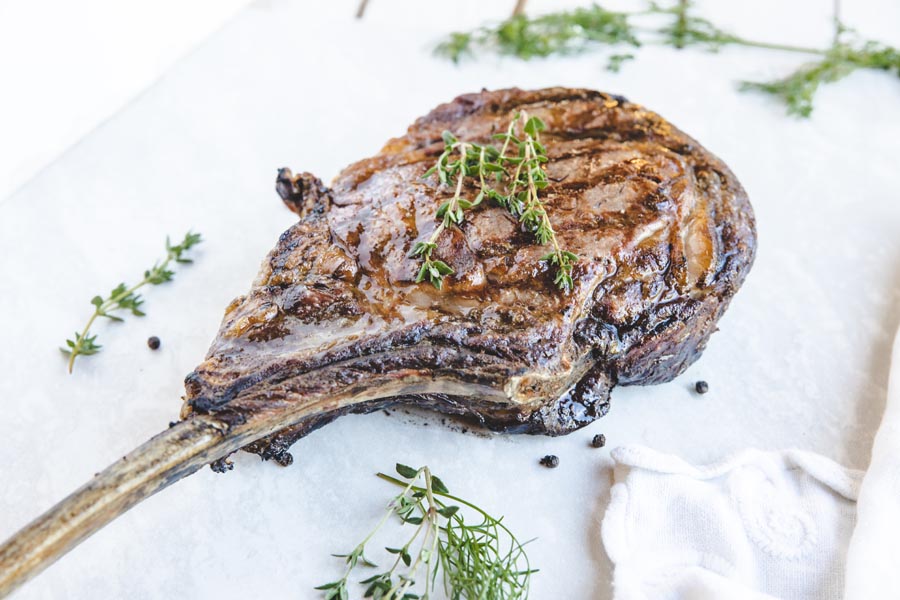
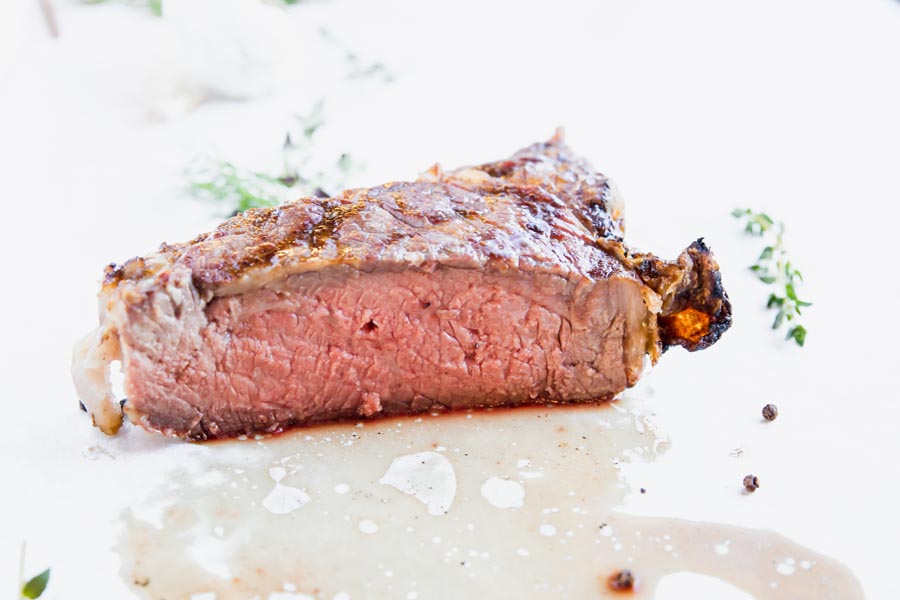
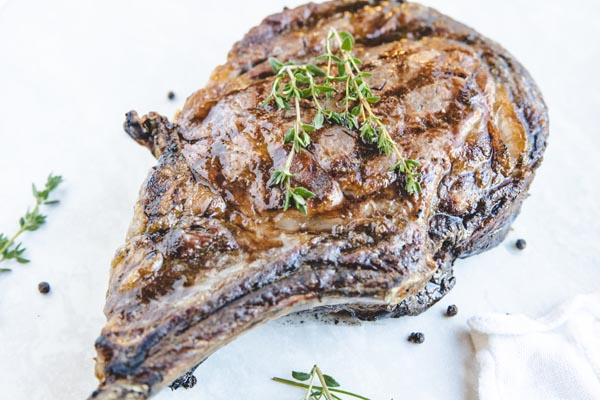
Grilled dry aged tomahawk steak with a crust that crackles and juicy, medium-rare pink from edge to edge — 0g net carbs and 75g protein. I reverse sear over indirect heat, then finish with a hard sear on this thick-cut ribeye.
I have grilled a lot of steaks, but the first thing I want to tell you about the tomahawk is which one to buy. I have tried both American Wagyu and USDA Prime dry aged tomahawks from Snake River Farms, and I prefer the Prime for grilling. The Wagyu has beautiful marbling, but all that intramuscular fat renders too quickly at high heat and you lose some of the texture. The Prime holds up better on the grill and still has incredible flavor from the aging process.
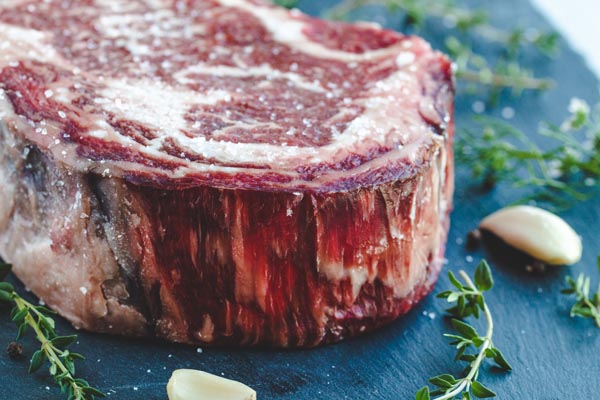
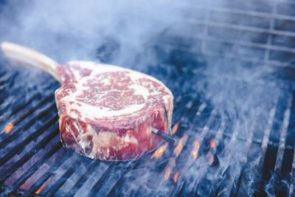
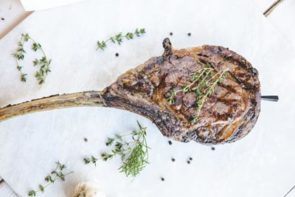
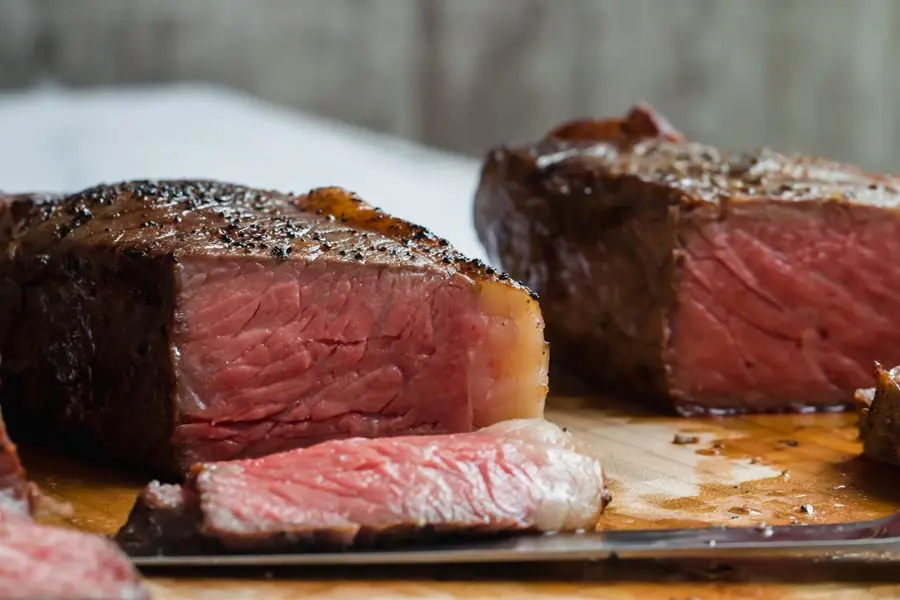
The bone on mine was 12 inches long, the meat over 2 inches thick, and when you reverse sear it right, every slice is pink from edge to edge. This is the steak I make when I want to impress someone, or when I want to treat myself on a Sunday afternoon.
You will notice I skip compound butter. Nearly every other tomahawk guide finishes with herb butter, but I get a better crust from my dry brine method (kosher salt overnight, no oil, no butter, and a 500-degree sear). The dry surface crackles the moment it hits high heat. If you are dairy-free or just want the clean beefy flavor of the aging to come through, this is the way.
If you love grilling beef, I have plenty of options on the site. My grilled flank steak is great for weeknights, and smash burgers are my go-to when I want something fast. For low and slow, my smoked beef ribs are incredible. But the tomahawk is in its own class. One reader told me her dad, who has been grilling steaks his whole life, watched her pull the steak at 120 and move it to the hard sear without saying a word. He ate his portion without critiquing a single thing she did. Coming from a lifelong griller, that says everything.
What is a tomahawk steak
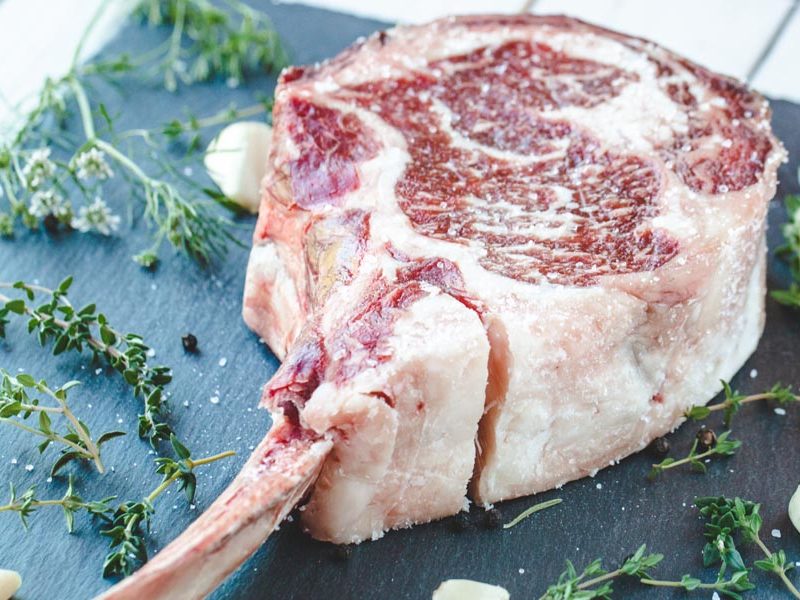
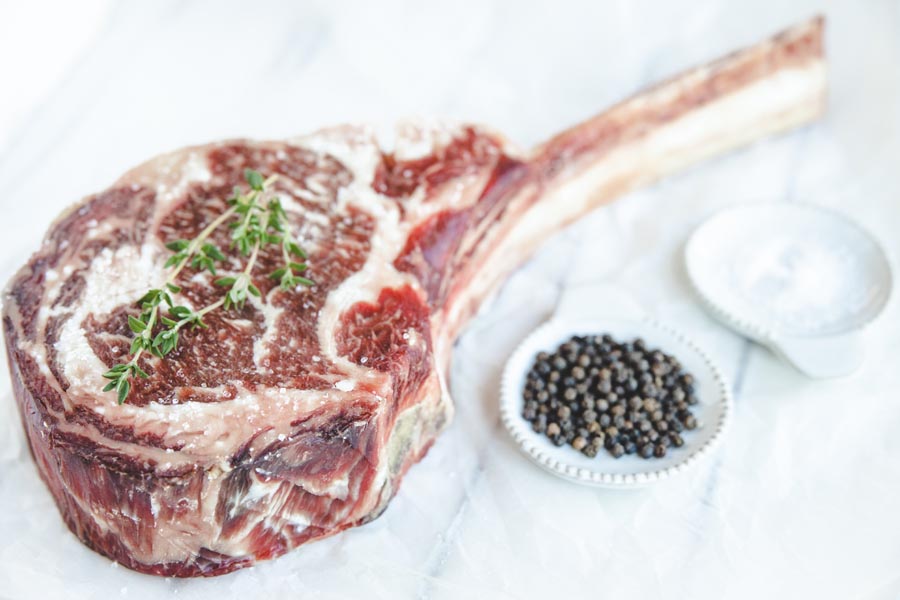
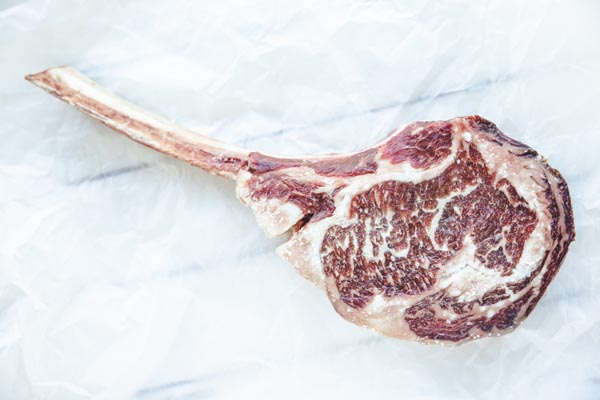
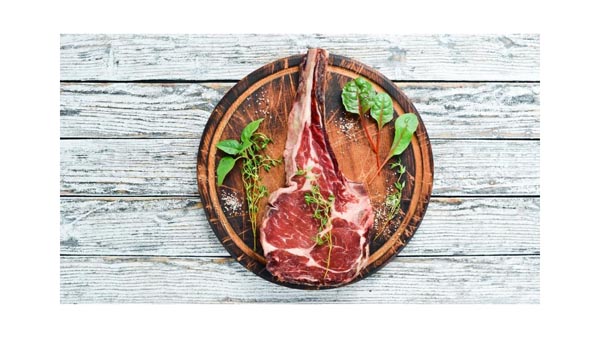
A tomahawk is a bone-in ribeye with the entire rib bone left attached. The bone on mine was about 12 inches long, which gives it that dramatic handle you can grip while cutting. The meat itself is incredibly juicy thanks to the fat cap running through the center.
The spinalis is the real prize. That strip of muscle along the outer edge is the most flavorful part of the entire steak. I always fight my husband for that section. It is so rich on its own, you do not even need butter or sauce. All that marbling makes it tender without any help.
Why I choose dry aged
The dry aging process is what sets this apart from a standard ribeye. The meat hangs in a controlled aging room for 30 to 65 days, which reduces its weight by up to 40% while concentrating the beefy flavor into something almost nutty and intense. I noticed the difference the first time I tried an aged cut. It tastes deeper, if that makes sense.
I get my tomahawks from Snake River Farms. Their USDA Prime version comes cut to about 2 inches thick and is aged for over 30 days. The aging process also makes the meat incredibly tender. Since it is all protein and fat with zero carbs, it fits keto perfectly without any modifications.
How to thaw a frozen tomahawk steak
If your tomahawk arrives frozen, I refrigerate it for 2 to 3 days to thaw slowly. I have tried the water bath shortcut and the steak lost moisture, so I do not recommend it. Slow thawing in the fridge keeps all that juice locked in.
Once it is defrosted, I unwrap it, pat it dry with a paper towel, and let it sit until it reaches room temperature. I salt all sides at least 2 hours before cooking, but honestly, I get the best results when I salt the night before. The salt draws moisture to the surface, then the steak reabsorbs it, which seasons the meat deeper than a last-minute sprinkle ever could.
Three methods for grilling a tomahawk
I have tested all three of these methods on a dry aged tomahawk, and I keep coming back to the reverse sear. But here is what I learned from each one.
Direct Heat Grilling
Whether your grill is charcoal, gas, or electric, direct heat lets you sear quickly by placing the steak right over the flame. I preheat to at least 500 degrees, sear each side including the thick edge, then lower to medium heat with the lid closed for 15 to 20 minutes. I pull it when my meat thermometer reads 125 degrees, then let it rest 10 to 15 minutes until it climbs to 135. This method works, but I get a gray band around the edges that I do not love on a steak this expensive.
Reverse Sear (My Preferred Method)
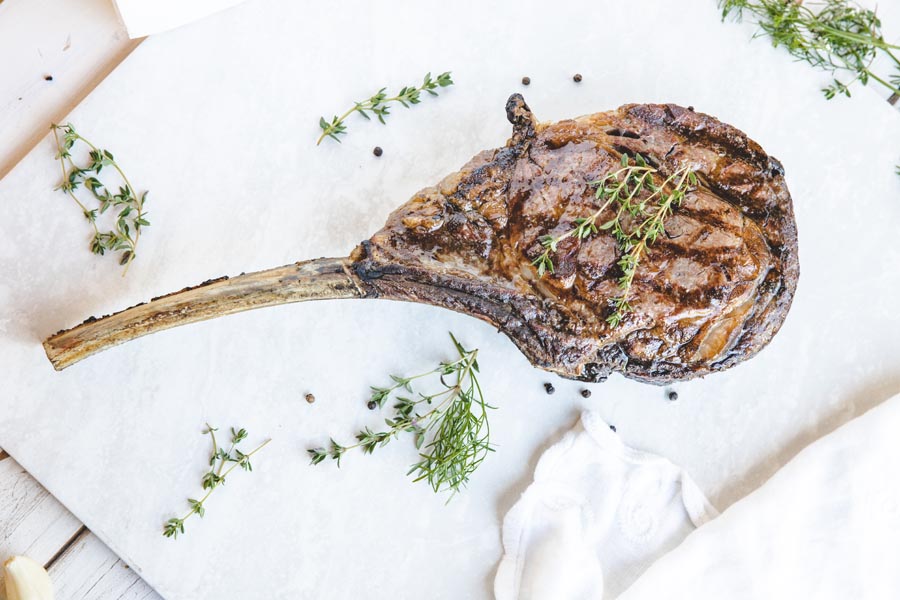
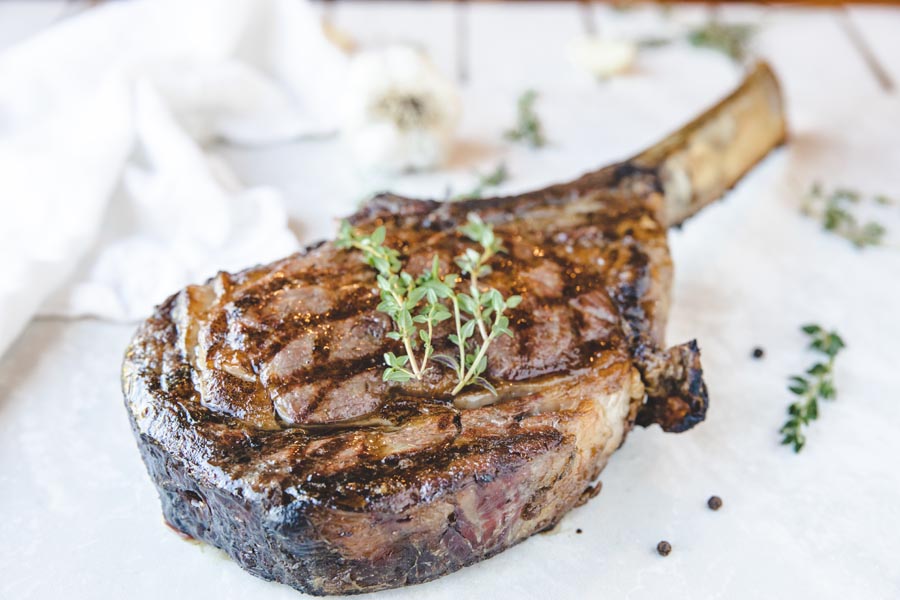
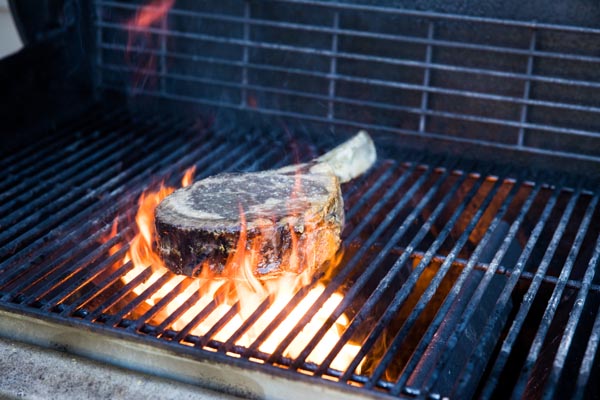
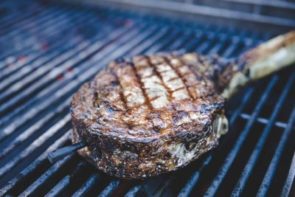
This is how I cook my tomahawk every time now. I place the steak on the cool side of the grill (opposite the coals or burners) and flip it every 5 minutes. When the internal temp hits 115-120 degrees, I pull it off and let it rest while I crank the heat. After about 15 minutes, I put the steak back on the hottest part of the grill for 1 to 2 minutes per side to get deep grill marks. I sear the fat edge too. No resting needed after the sear, so I slice and serve immediately.
If you are on a charcoal kettle, bank all the coals to one side. Cook the steak on the empty side with the lid on for indirect heat. When it is time to sear, move it directly over the coals. The 500-degree target is grate temperature directly over the coals, not the dome thermometer (dome reads about 50 degrees cooler). The reverse sear gives me perfectly even medium-rare with a crackling crust every single time.
Sous Vide Tomahawk
Sous vide cooks food in vacuum-sealed bags in a temperature-controlled water bath. I set my circulator to 129-135 degrees, seal the tomahawk in a vacuum bag, and cook for 1 to 3 hours depending on thickness. The result is perfectly even doneness from edge to edge.
Once the time is up, I remove the steak from the bag and pat it completely dry with a paper towel. I heat avocado oil in a large cast iron skillet until it is smoking, then sear for about a minute per side. I hold it upright with tongs to crisp the fat edge. The crust from the cast iron is incredible, but I still prefer the smoky char from the grill. If you want to try the water bath method, I walk through the full process in my sous vide steak guide. Slice and serve immediately.
How to grill a tomahawk steak
The cooking method for a tomahawk is the opposite of a traditional steak. Normally you sear first, then finish cooking. But since this cut is over 2 inches thick, I flip that order. I cook it over indirect heat first, flipping every 5 minutes, until my probe reads 115-120 degrees. Then I pull it off, let it rest while I crank the heat, and finish with a hard sear for 1-2 minutes per side.
I used to pull at 125, but after testing it repeatedly on cuts this thick, I get better results pulling at 115-120. The carry-over heat from the final sear brings the center to 130-135, which is perfect medium-rare. Season the ribeye on all sides with kosher salt at least 2 hours before grilling, or overnight if you can. I never rinse the salt off. The crust is better when I leave it.
Season all sides of the tomahawk steak generously with salt and pepper at least 2 hours before grilling. I recommend salting a thick ribeye steak 6 hours to overnight before grilling for the best salt penetration. Store in the refrigerator until ready to cook, but let steak come to room temperature before grilling. Insert a meat thermometer into the steak.
2
Grill direct heat
Preheat the grill to at least 500 degrees. Grill the tomahawk ribeye over direct heat for about 1 minute each side (cook the edges too).
3
Move to indirect heat
For indirect grilling, move steak to indirect heat until the internal temperature reaches 125 degrees.
4
Let rest
Pull the steak off the grill and let rest about 10 minutes or until the internal temperature of the meat thermometer reaches 135 degrees.
Nutrition
Per serving: 1/3 of recipe
Calories
624
Fat
36g
Protein
75g
Total carbs
0g
Net carbs
0g
Nutrition is an estimate calculated from the ingredients listed. Brands vary, so check labels if you track closely.
Frequently Asked Questions
What's the difference between a cowboy cut and a tomahawk cut of steak?
I have cooked both and the only real difference is bone length. A tomahawk keeps the full rib bone attached, about 12 inches, while a cowboy cut trims it down to 4 to 6 inches. Both are bone-in ribeyes with the same marbling and flavor. I prefer the tomahawk for presentation (that long bone handle looks incredible on a plate), but if your grill is small, a cowboy cut is easier to maneuver.
How do I reverse sear a tomahawk on a charcoal kettle grill?
I have done this many times and it is straightforward once you understand coal placement. Bank all your coals to one side of the kettle. Place the steak on the empty side, close the lid, and flip every 5 minutes until your probe reads 115-120 degrees. Then move it directly over the coals for 1 to 2 minutes per side. The 500-degree target is grate temperature directly over the coals, not the dome reading. My dome usually reads about 50 degrees cooler than the grate surface. Keep the bottom vents open and the top vent half closed to hold heat steady during the indirect phase.
Do I need compound butter on a tomahawk?
I skip it completely and I think the steak is better for it. When you start with a proper dry brine (kosher salt, uncovered in the fridge overnight), the surface dries out enough that the sear alone produces a crust that crackles. Compound butter adds richness, but aged beef already has concentrated, almost nutty flavor from weeks of moisture loss. Butter masks that. If you are dairy-free, this approach works perfectly without sacrificing anything on the crust.
Should I pull the steak at 115 or 125 degrees for the reverse sear?
I pull mine at 115-120 degrees now, not 125. On a cut this thick, the carry-over heat from the final high-heat sear brings the center to 130-135, which is perfect medium-rare. I used to wait for 125, but the steak would overshoot into medium territory after the sear. A probe thermometer is the only way I trust to hit the target. Every tomahawk is a slightly different thickness, so go by the number, not by time.
How do I reheat leftover tomahawk steak without overcooking it?
I reheat mine in a skillet over medium heat for about a minute per side. That is enough to warm the center without pushing it past medium-rare. I do not microwave thick steak because it turns the edges gray and rubbery. If I have a large portion, I slice it into strips first so each piece heats evenly. The crust actually crisps back up in the hot pan, which is a nice bonus.
Can I cook a tomahawk on a Traeger or pellet grill?
I have cooked thick ribeyes on a pellet grill and the reverse sear works well on it. Set the temperature to 225 degrees and cook the steak on the grate until the internal temp hits 115-120. Then pull it off, crank the grill to its highest setting (usually 450-500 on most pellet grills), and sear for 1 to 2 minutes per side once it is fully heated. The smoke flavor from the pellets adds a layer you do not get on gas or charcoal. I prefer lump charcoal for a cleaner sear, but a pellet grill produces an excellent result.
Can I cook a tomahawk steak in a cast iron skillet?
I have done this and it works, but you need a big skillet. My tomahawk barely fits in a 12-inch cast iron. I sear it on the stovetop first, then finish it in the oven at 250 degrees until the internal temp hits 115-120. The crust from cast iron is fantastic, but you miss the smoky flavor from the grill. If you want a great indoor steak option, my air fryer steak bites are quicker and still hit that seared crust.
How many people does a tomahawk feed?
My 42-ounce tomahawk easily feeds 2 to 3 people as a main course, or 4 if I am serving it family-style with sides. I have served one to a table of 4 adults and everyone got a generous portion. If I am cooking for a bigger group, I grill two and slice them both. For a different approach, my braised short ribs feed a crowd with less fuss. I also love pairing the tomahawk with grilled salmon for a surf and turf spread, or grilled marinated chicken for guests who want a lighter option.
Got a tomahawk sitting in my fridge for our anniversary dinner Saturday and this is the plan!! Annie, your recipes have not steered me wrong yet. Fingers crossed I nail the reverse sear! 🙂
Hi Winnie, you need the thermometer. These are all different thicknesses, so time tells you nothing on a cut this thick. I pull mine off the grill and let it rest until it reads 135.
Pulled this at 125, let it rest the full ten, then kept one piece and had the rest in containers before the dishes were done. Sliced it cold against the grain next morning. Went straight into salad bowls for three days, no reheat, no rubbery texture. If I want it warm, 2 minutes in cast iron on medium-low is the move. The dry-aged price keeps this from being weekly, but one cut covering four days of lunches beats most of what I batch cook.
Cold slicing is actually cleaner. I get a better cut cold than right off the grill because the fat firms up and the grain is easier to follow. A 42-ounce steak covering four days of lunches doesn’t feel like a splurge once you run the math that way.
Genuinely didn’t expect this to hit me the way it did. My dad did a tomahawk every year for his birthday, big production, but he always threw it over direct flame and we’d eat it half-gray inside. The reverse sear getting the interior right, that crust crackling when the knife went in. First bite and I went right back to his backyard. He would have asked so many questions about the method.
Someone who already ran a whole tomahawk production once a year would’ve had the right questions. The pull temp is where it all changes. I pull mine at 115 now, carry-over handles the rest.
Found this bookmarked on my son’s phone last week before I even knew he was looking. He’s been tracking protein for lacrosse, so the numbers made sense to him. Ran the thermometer himself through the whole reverse sear and called out each temp check like he was announcing it.
Finding it himself and then running the thermometer solo is not a small deal. The reverse sear has enough stages that once you start calling out temps, you’re in it. 75g protein per serving, lacrosse handled.
The sear just seals what the slow phase built. I pull at 115 so the carry-over from a hard sear finishes the job. Sounds like you’ve done this a few times, Marcus.
Three in one spring is not nothing. The dry aging does something to that surface you can’t replicate with a fresh cut – it’s why I won’t bother with the un-aged version anymore.
My husband is the self-appointed steak guy in our house, so letting me run the grill was already a statement. He watched the whole reverse sear process skeptically and then got really quiet after the first bite. That quiet said it all. The even pink all the way through on a cut that thick is what got him. One thing: don’t skip the full rest. I pulled it at 7 minutes and the board was a mess, waited the full 10 the second time and it was night and day.
That quiet is the whole review. And yeah, the rest thing isn’t optional on a cut that thick – the juices are still moving at 7 minutes. 10 is the floor.
My husband considers himself the grill person in this house. Made this Sunday and when I sliced into it he just stood there watching the pink go edge to edge, which from him is basically a standing ovation.
I’ve tried a couple of other tomahawk recipes that had me doing all kinds of marinades and rubs and still ending up with that gray overcooked band on the outside. Starting indirect first was different, and the pink actually went edge to edge like the photos. Four stars because I let mine go a couple minutes past temp and lost some of that juiciness (totally on me, not the recipe). Trying it again this weekend and pulling it earlier.
That gray band is exactly what the reverse sear solves. Pull at 115 next weekend – carryover on a cut this thick is aggressive, and 2 minutes past means closer to medium than medium-rare.
Reverse sear is right, but you’re leaving flavor on the table. Season the day before, not right before the grill. Dry brining 24 hours out pulls moisture back into the meat and the crust you get is on a completely different level.
Just picked up a charcoal kettle last fall and this is the first serious cook I want to try on it. Been on gas forever, so the heat management feels totally different. Reverse sear makes sense for something this thick, I just can’t figure out how to pull it off on a kettle. On gas you kill a burner. On charcoal I’m guessing you bank the coals to one side and move the steak over them for the hard sear at the end? Does the 500 degree target apply to the grate temp directly over the coals, or is that more of a dome thermometer reading? I want that edge-to-edge medium-rare you’re describing and I’m kind of afraid I’m going to blow it on a setup I’m still figuring out.
Yeah, bank the coals to one side exactly like that. The 500 is grate temp directly over the coals, not the dome (dome reads 50 degrees cooler usually). Get that grate fully ripping before you move the steak over for the sear.
Reverse sear works here. Done tomahawk a few times and always fought uneven doneness, so this time I pulled off indirect at 115 instead of waiting for 125. Carry-over from that 500-degree blast brought it to medium-rare edge to edge. The crust on dry-aged beef crackles in a way fresh-cut just doesn’t. If you have a probe, pull early. Trust it.
My whole household is dairy-free, so compound butter (which shows up in basically every other tomahawk recipe I’ve seen) is completely off the table for us. I really want to try the reverse sear method here, but I’m not sure about the crust situation. Is that crackly exterior something you get just from the high-heat sear at the end, or does butter usually factor in somewhere I’m not seeing?
The crust is all from the sear. No butter anywhere in mine. Dry brine overnight if you can, it dries the surface so when you sear it hard, the crackle forms fast. You’re good dairy-free.
My dad has been grilling steaks his whole life and has opinions about basically every step of the process. When I pulled it off the grill at 120 and moved it to the hard sear, he just watched and didn’t say a word. He ate his portion without critiquing anything I did, which coming from him means a lot. The crust had a real crackle when you cut through it, and the inside was pink all the way to the edges in a way I’ve never managed with a cut that thick. We did this on a cold Sunday in February and I think it’s the first time I’ve genuinely nailed a steak. Going to do two next time so there are actual leftovers.